Why storylines get LARPed before they get built
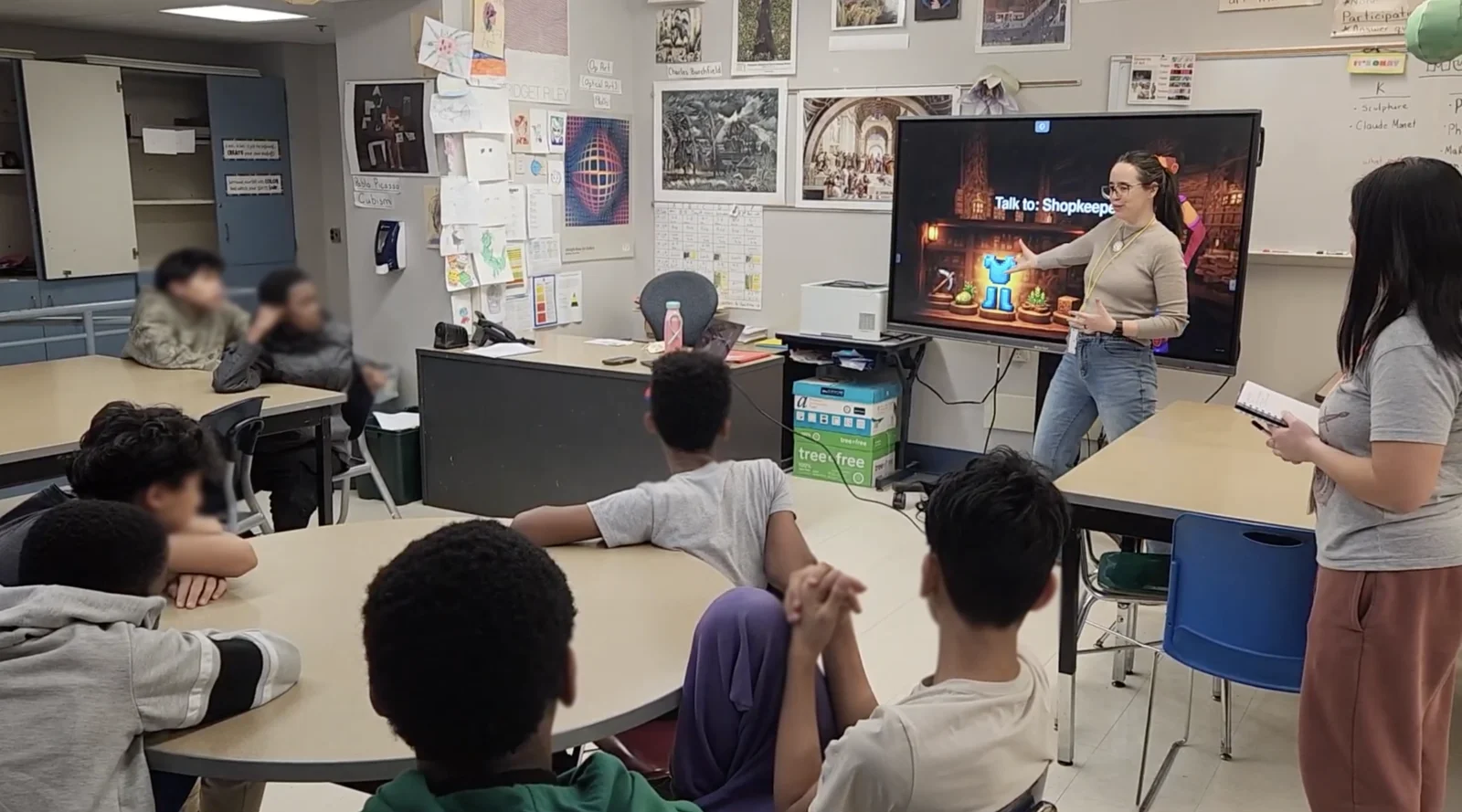
Immersed Games is codesigning a statistics quest with middle schoolers at Buffalo Public Schools. The team went in knowing it needed a more concrete way for students to give feedback — teachers struggle to think through a storyline in the abstract, much less middle schoolers. So the sessions don’t ask students to design the story. They hand students the story and watch what they do with it.
The storylines get LARPed before anything is built. A designer plays the NPC in front of the class, and the students react in real time — what do you ask the shopkeeper, what do you do when she tells you that. The responses are unfiltered, the kind no one would get by asking a room of twelve-year-olds to “design” something on paper.
The results beat what the team would have written alone. Students ask questions no one had thought to anticipate, propose plot turns no one would have written, and tease the NPC in ways that genuinely improve the script. Notes are taken on the spot, and the quest gets built with the students’ exact wording threaded in.
When they see it later — their words, in the actual game — they are delighted. “That’s the loop we want kept tight,” says founder and CEO Lindsey Tropf. “Their voice into the work, and back to them.”