← Insights/Field note
ConcreteAug 5, 2026Field notes · Serious Play Conference · Duke University · August 2026

A year of codesigning with teachers and students
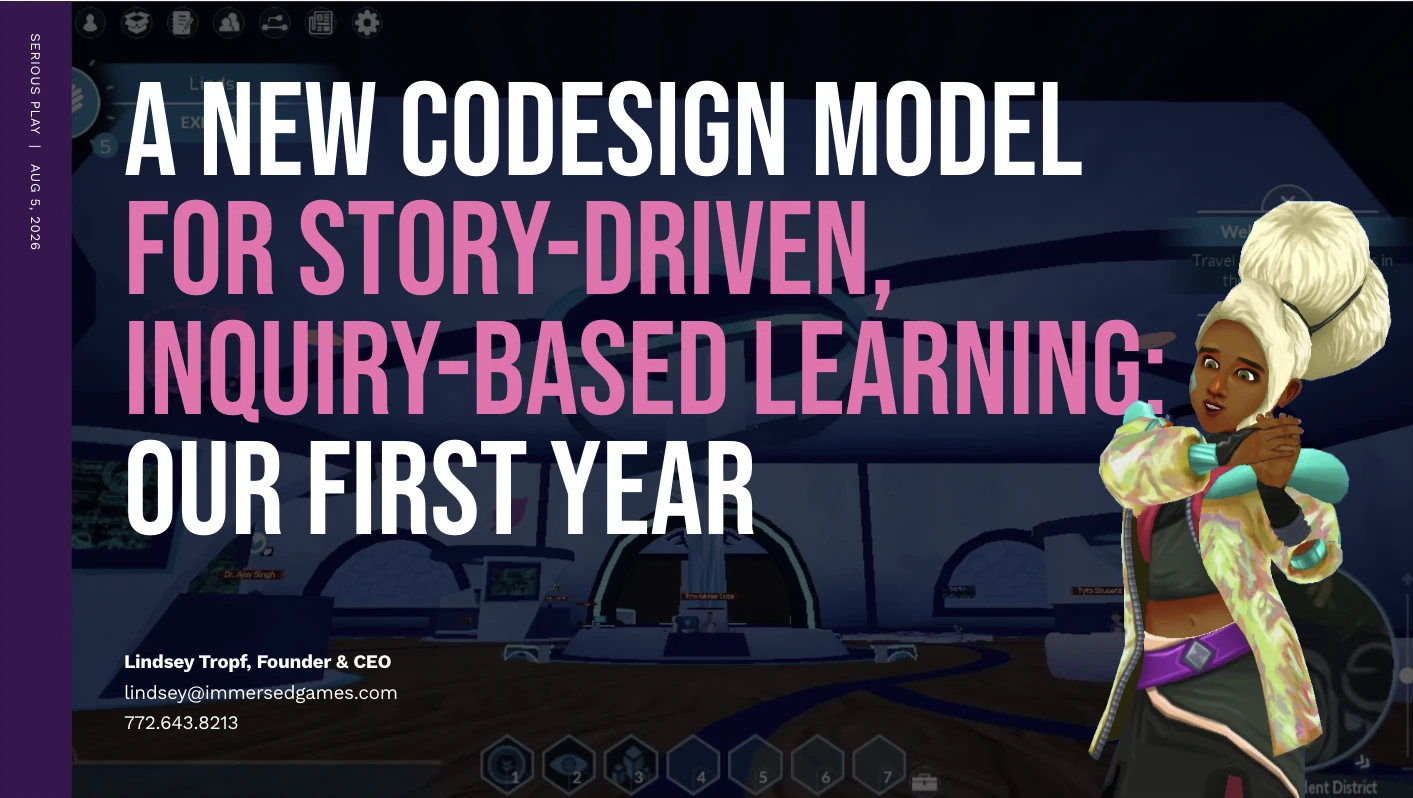
Title slide: “A new codesign model for story-driven, inquiry-based learning: our first year,” Lindsey Tropf, Founder & CEO, over a Tyto game scene.

At the Serious Play Conference, Immersed Games presented the first year of its co-creation model. A smaller audience turned the session into an extended discussion, with attendees bringing challenges and questions from their own programs.

The model was built against three problems. The team had been designing in a silo and needed a better process. It wanted real, empowered codesign rather than user testing under a nicer name. And every stakeholder group — Immersed Games very much included — is missing some part of the domain knowledge the work requires.

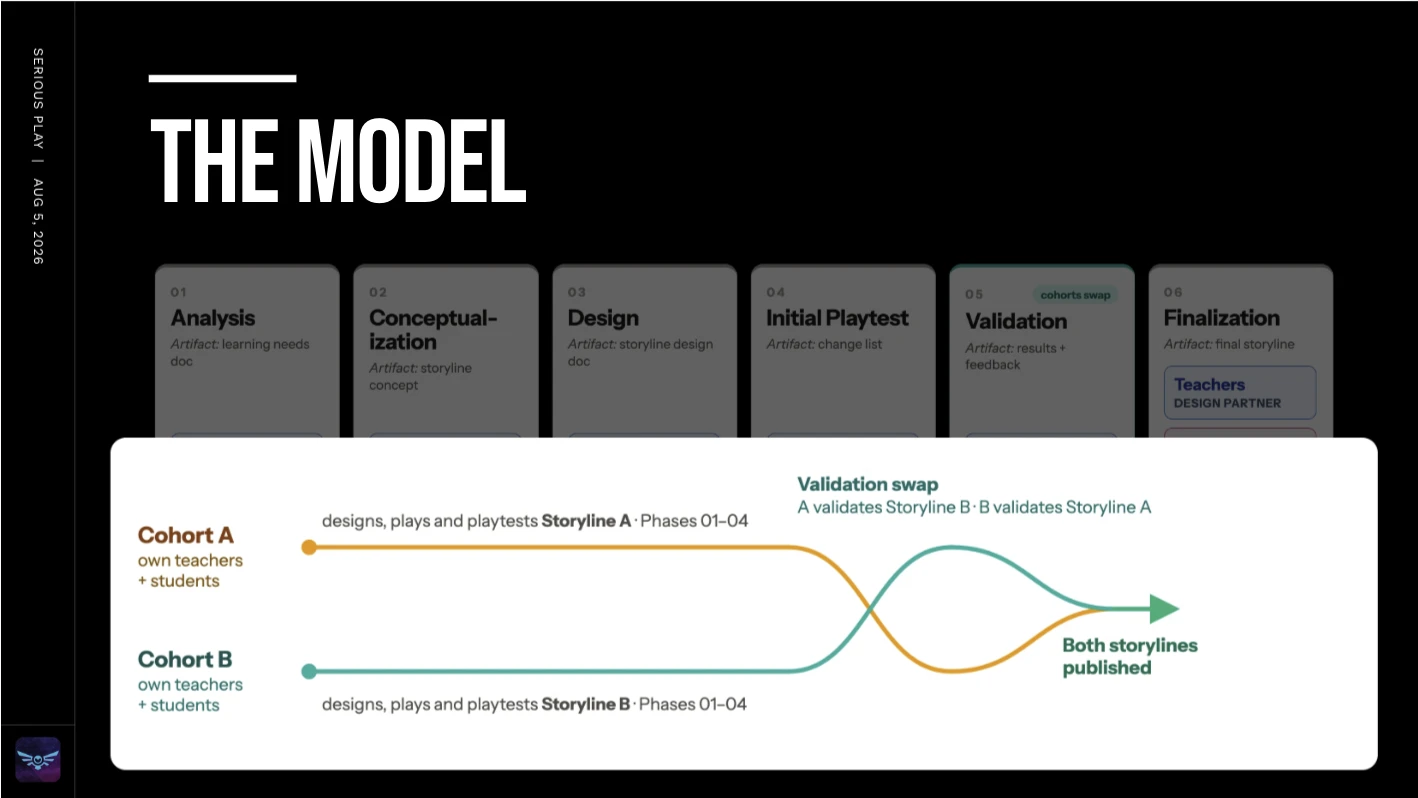
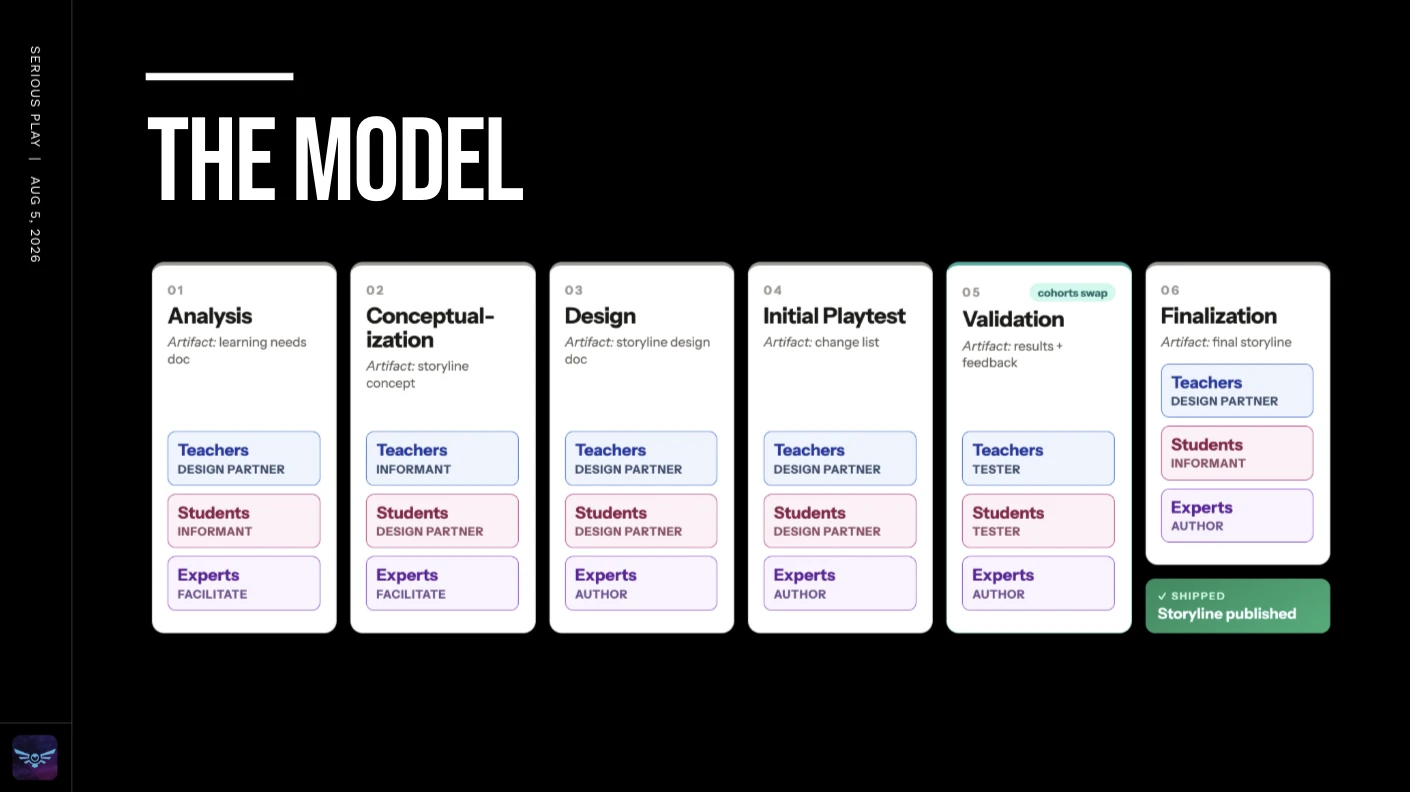
What emerged runs in six phases: analysis, conceptualization, design, initial playtest, validation, and finalization. Teachers, students, and subject-matter experts each take a different role at each stage — design partner, informant, facilitator, author. Two cohorts run in parallel and swap at validation, so each playtests the other’s storyline before both are published.

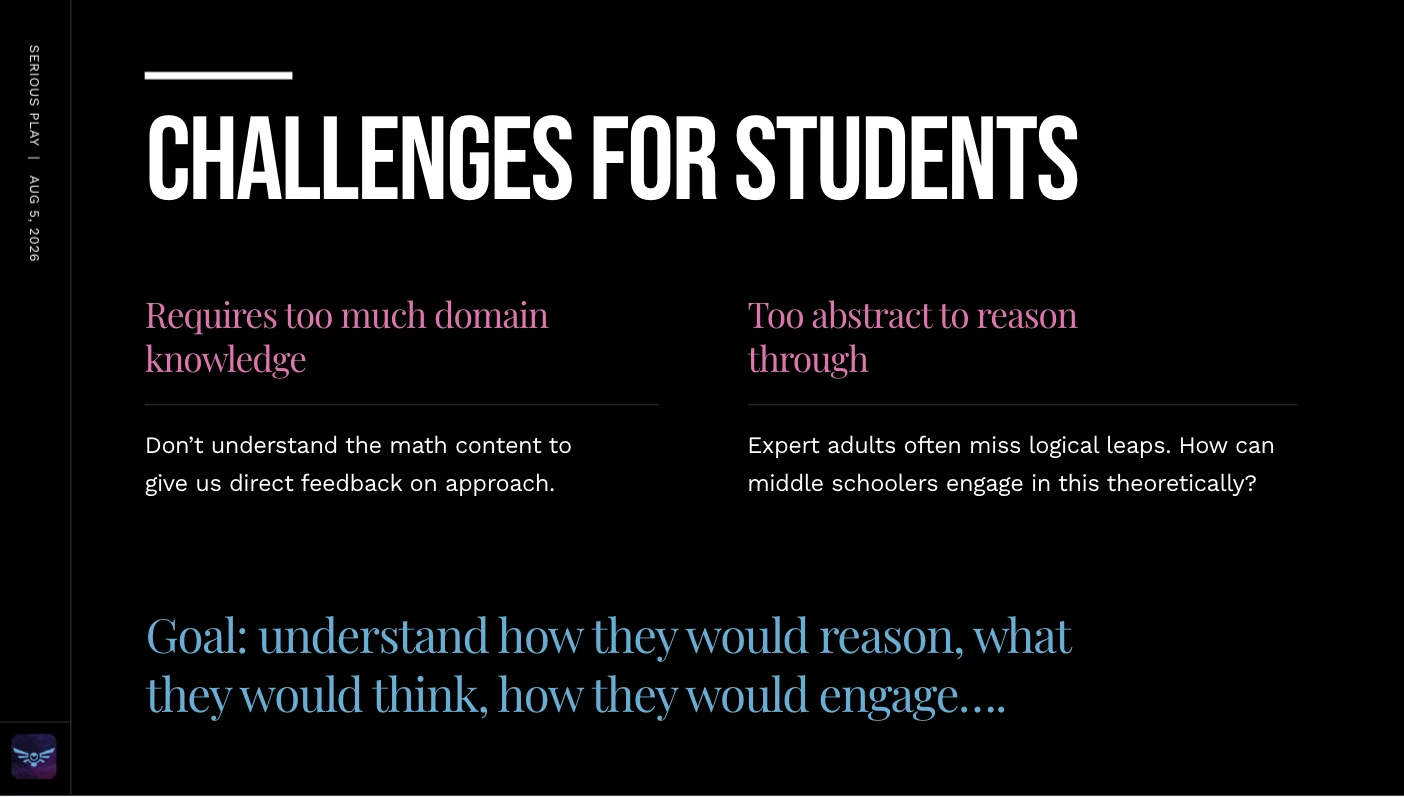
Students are the hardest part of the model. They do not have the domain knowledge to give direct feedback on a mathematical approach, and the content is too abstract to reason through in a meeting — expert adults miss the logical leaps too. The workaround is live-action role play, described in why storylines get LARPed before they get built. Rather than asking students to evaluate a design, the team stages the story and observes how they actually reason, react, and engage.

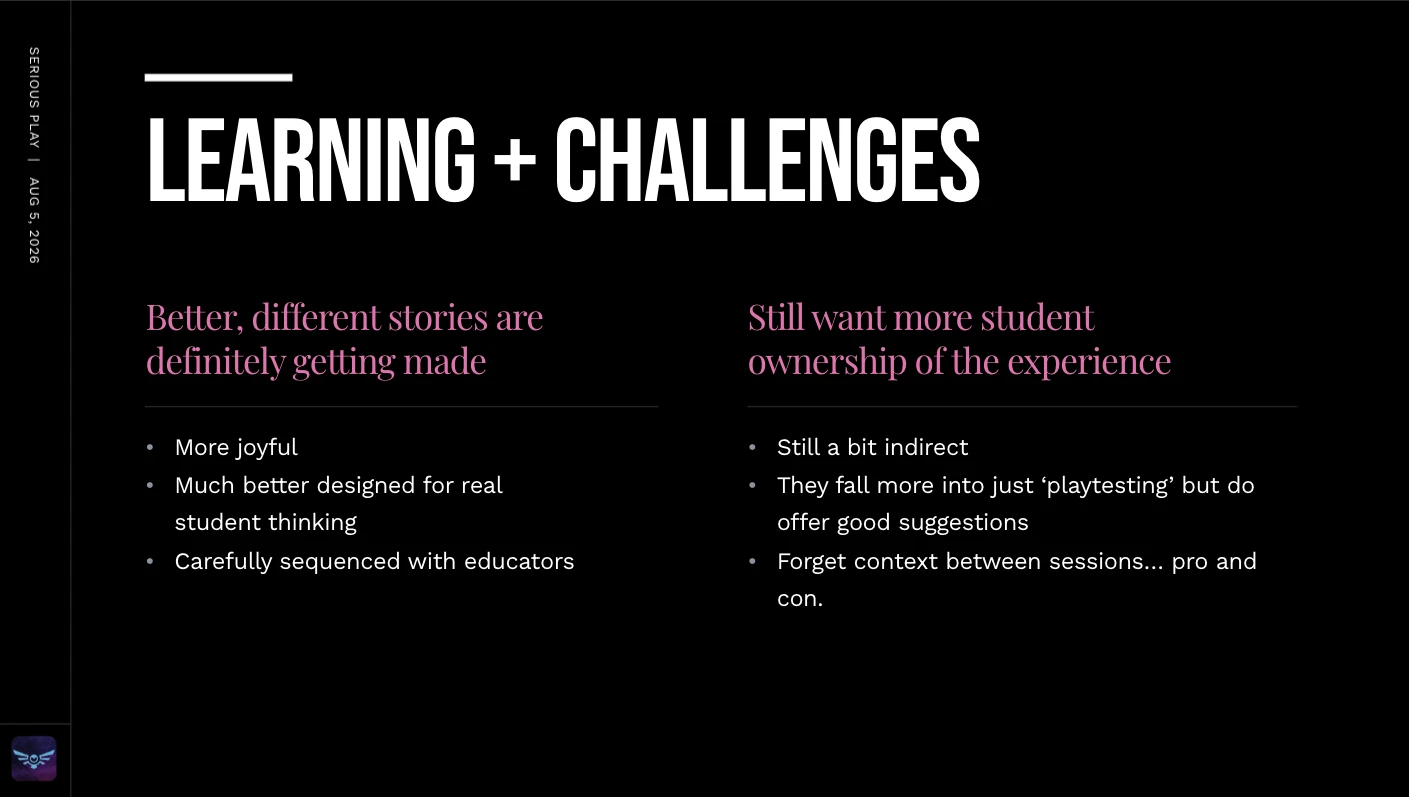
After a year, the storylines coming out of the process are clearly different: more joyful, better designed around real student thinking, and more carefully sequenced with educators. One problem stays open. Student ownership is still lower than the team wants — participation skews toward playtesting rather than designing, contributions tend to be indirect, and context is lost between sessions, which cuts both ways.
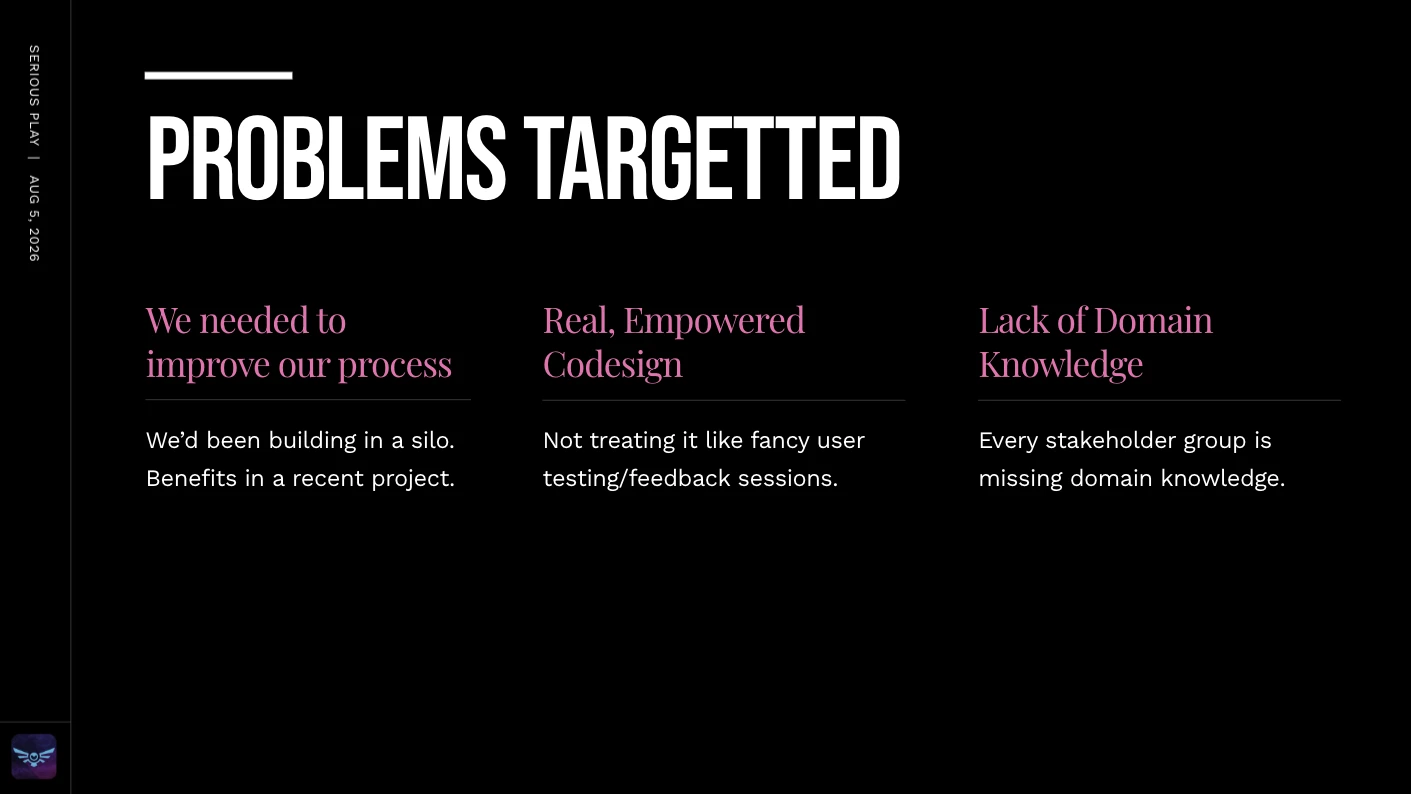
Slide, “Problems targetted”: we needed to improve our process; real, empowered codesign; lack of domain knowledge.
Slide, “The model”: six phase cards — analysis, conceptualization, design, initial playtest, validation, finalization — each listing the role teachers, students, and experts play.
Slide diagramming the cohort swap: cohort A and cohort B each design and playtest their own storyline through phases 01–04, then cross over at validation before both storylines are published.
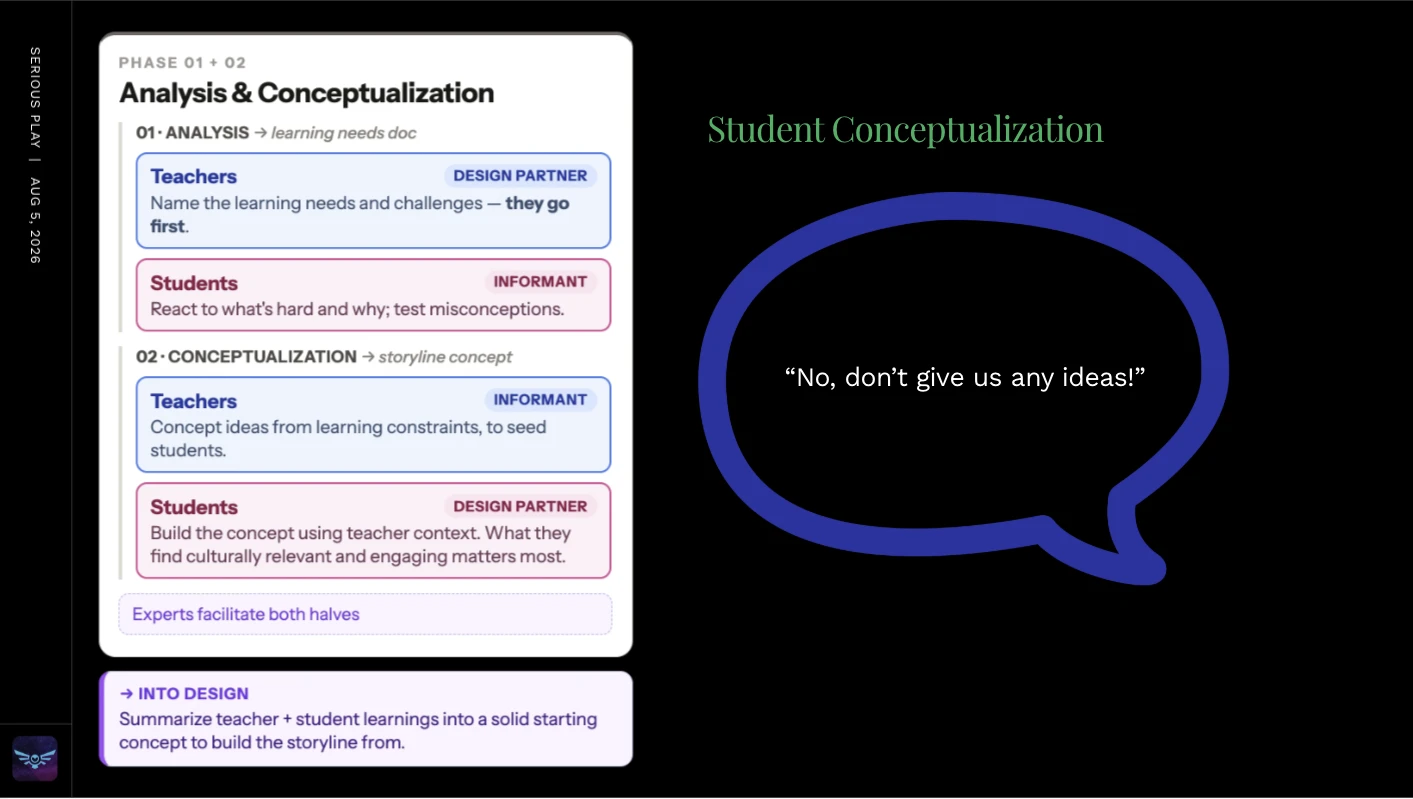
Slide detailing analysis and conceptualization phases, beside a large speech bubble quoting a student: “No, don’t give us any ideas!”
Slide, “Challenges for students”: requires too much domain knowledge; too abstract to reason through. Goal — understand how they would reason, think, and engage.
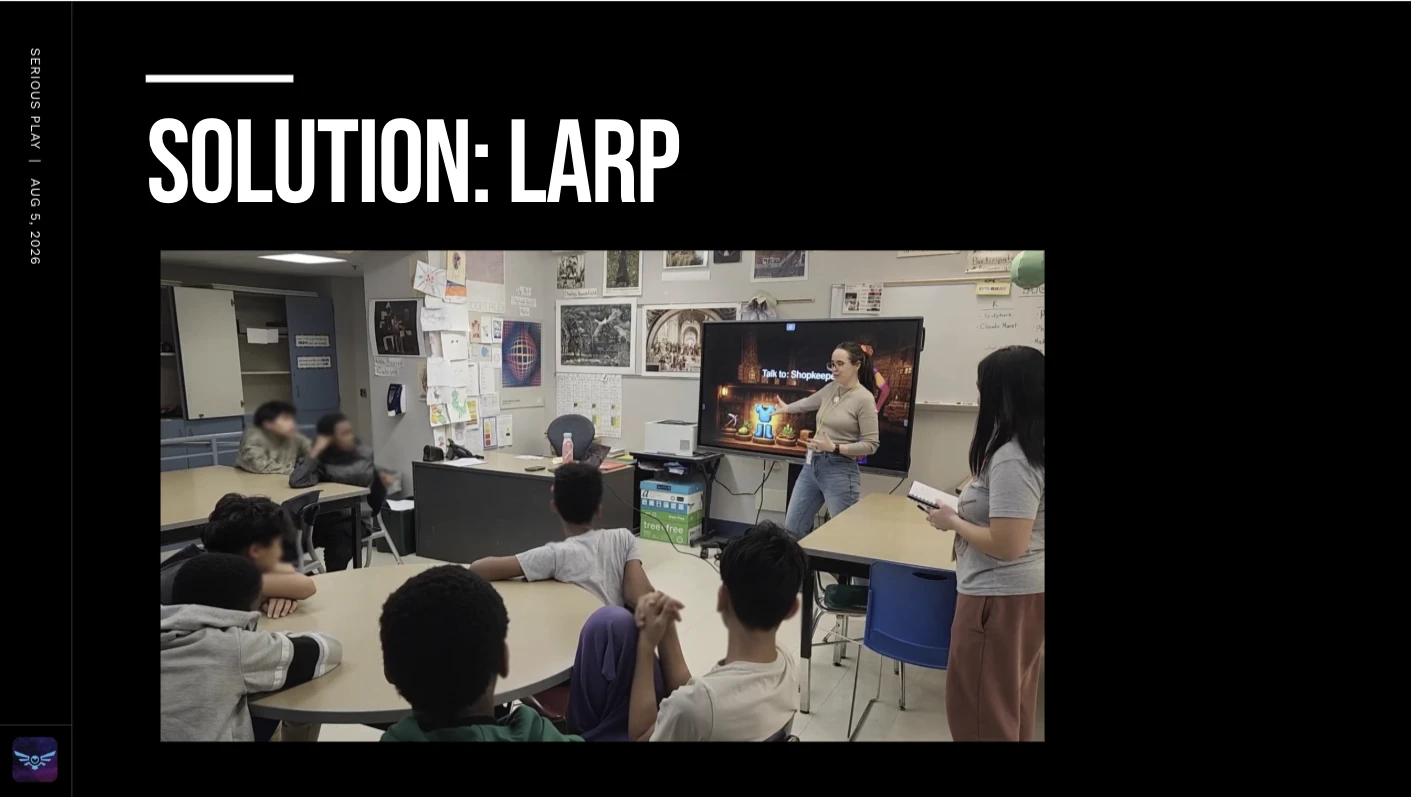
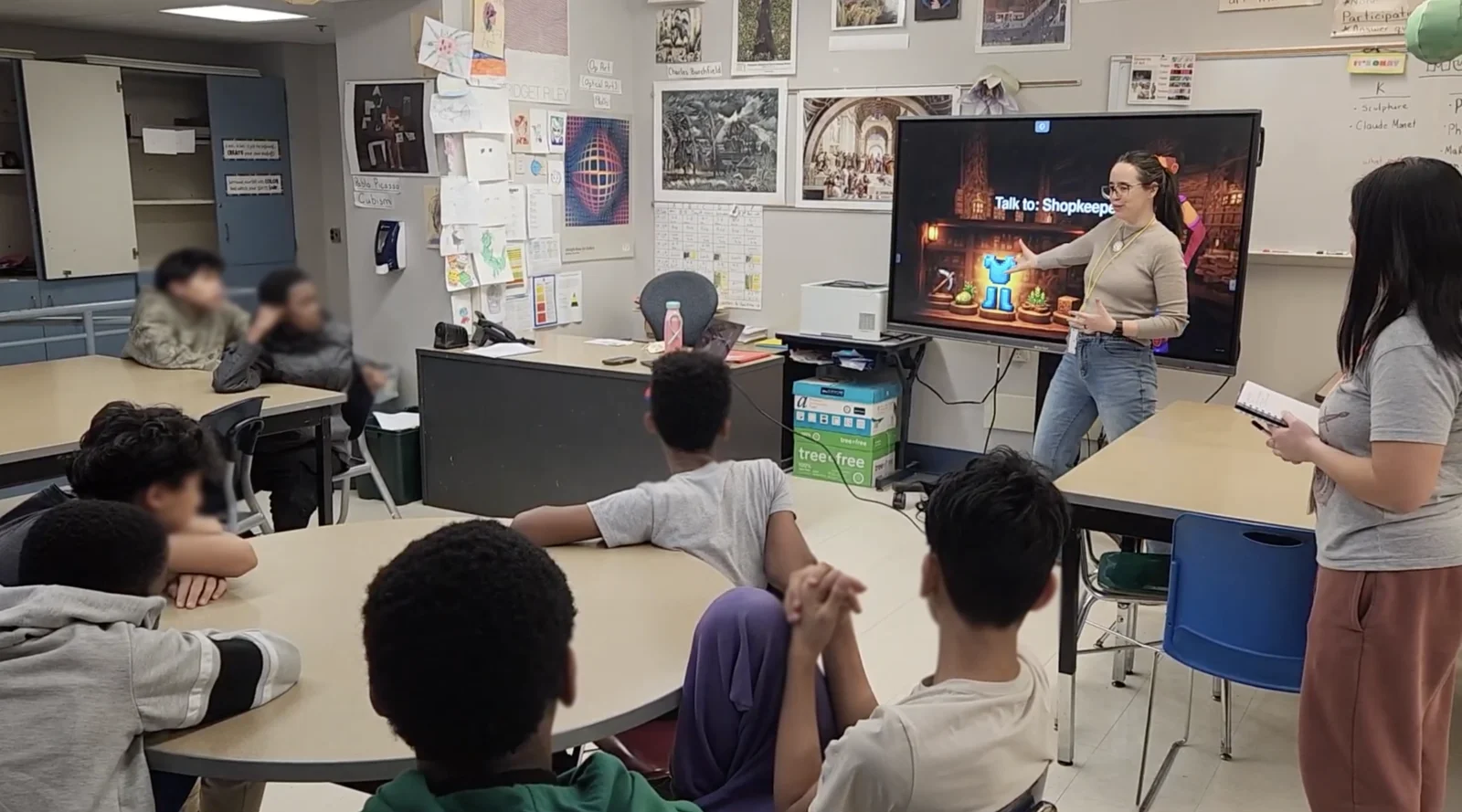
Slide, “Solution: LARP,” showing a photo of Lindsey role-playing an NPC in front of a middle-school class.
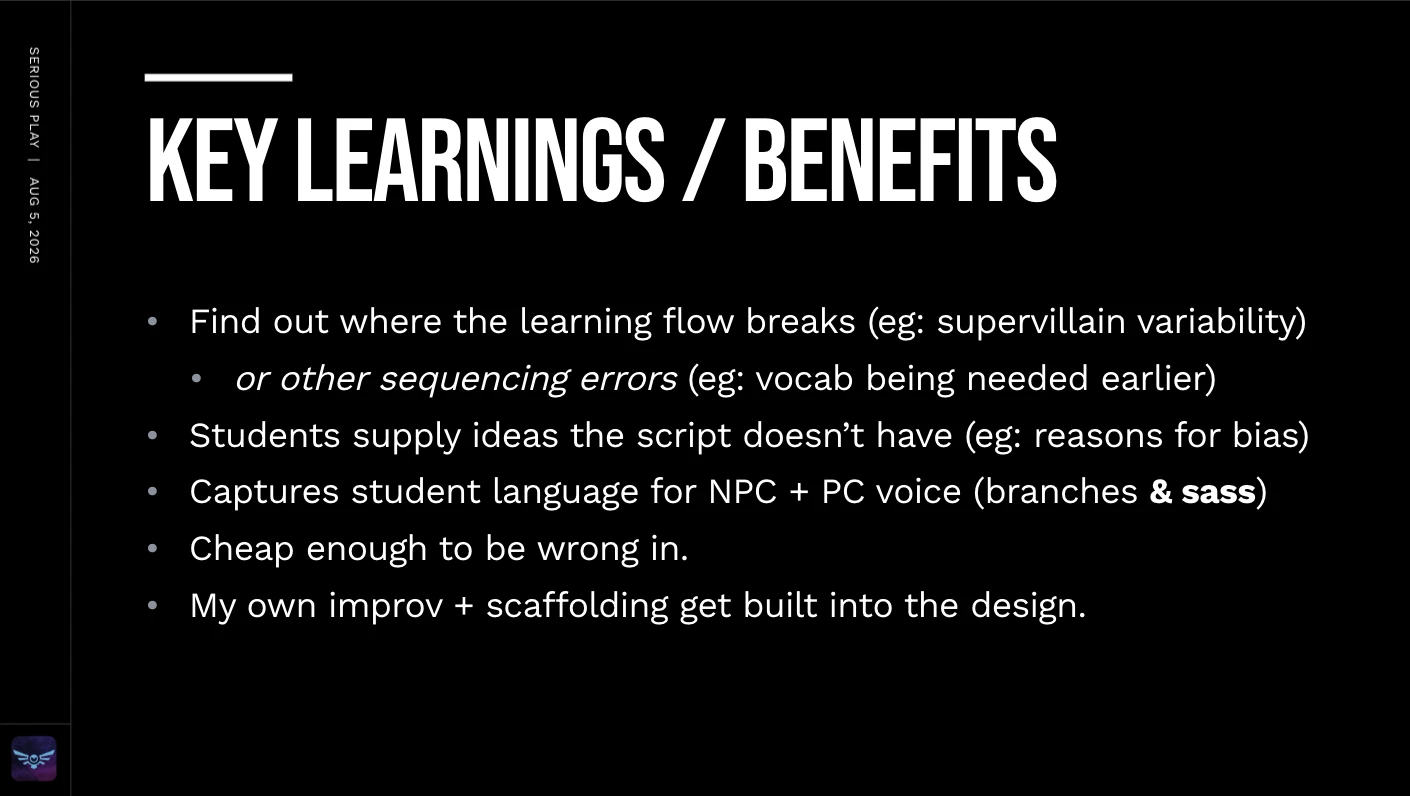
Slide, “Key learnings / benefits”: finding where the learning flow breaks, students supplying ideas the script doesn’t have, capturing student language for NPC voice, cheap enough to be wrong in.
Slide, “Learning + challenges”: better, different stories are getting made — versus still wanting more student ownership of the experience.
Link to thisOpen page

More from the feed.

See everything →
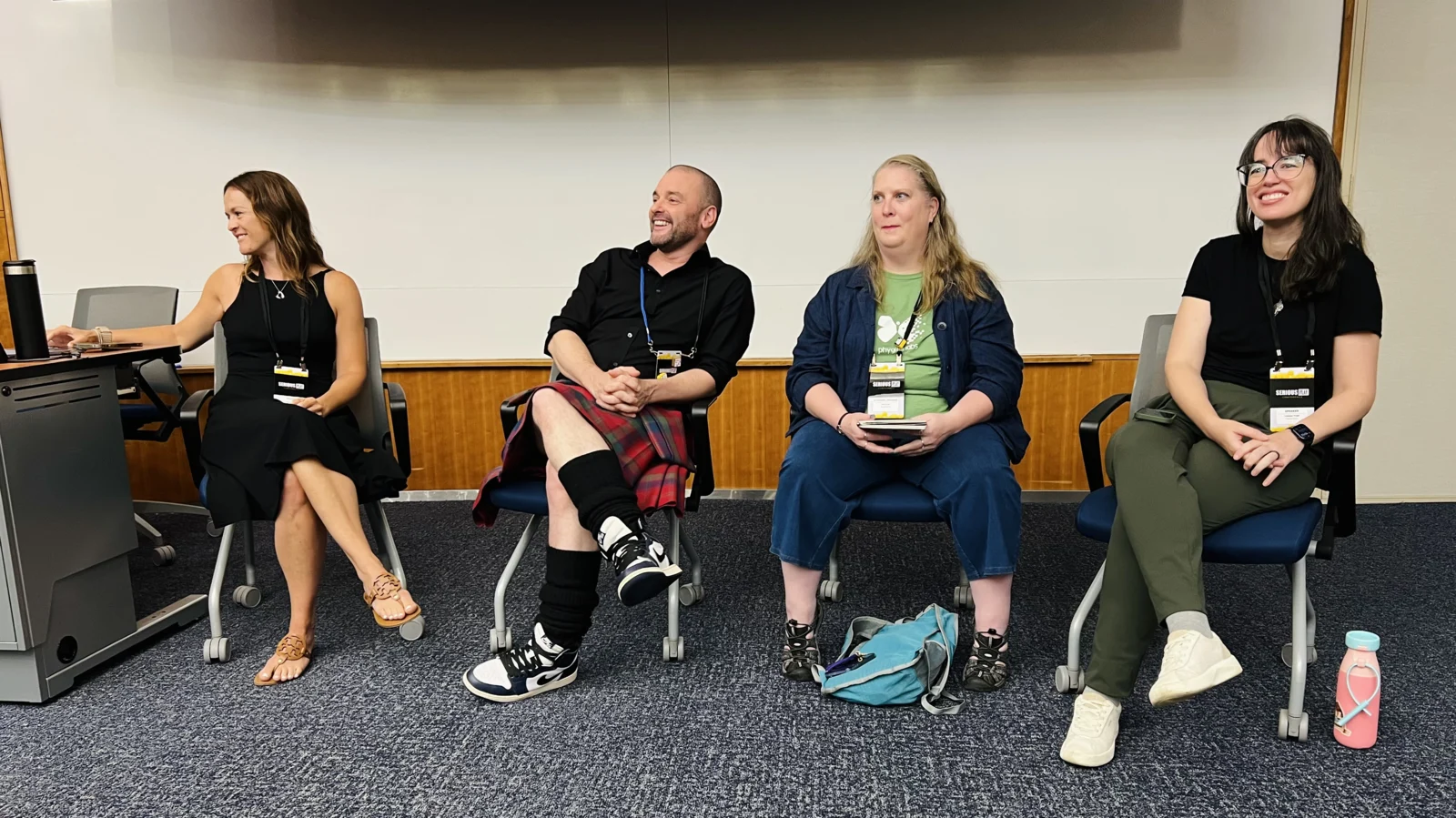
Four panelists seated in a row at the front of a conference room, all laughing mid-discussion, conference lanyards on.
3 photos
Field notes · Serious Play Conference
Pedagogy first

Founder and CEO Lindsey Tropf joined a Serious Play panel on how education teams are actually using AI, where the guardrails belong, and the one guideline each panelist would want the field to adopt.

Aug 5, 2026Read note
Lindsey role-playing an NPC in front of middle-school students in a Buffalo Public Schools classroom, with a colleague taking notes beside her and a game screen showing “Talk to: Shopkeep…”
Field notes · Codesign LARP
Why storylines get LARPed before they get built

Immersed Games is codesigning a statistics quest with middle schoolers at Buffalo Public Schools — by handing them the story and watching what they do with it.

Apr 28, 2026Read note
Key art · the Himalayan biome