I love that so many people are excited about using games or gamification to help learners engage with learning. But when I talk to folks about game-based learning, often they come from this perspective:
I appreciate this inspiration, but when people don’t realize why it is that games are so powerful for learning — the real reason we should use them — we end up with many, many poor learning games that aren’t taking advantage of what games as a medium bring to the table.
From Raids to Research
I approached this field from the opposite perspective: being a gamer who was going to college for a doctorate in education. As I sat in classes and learned about instructional best practices, I kept tying them back to models within games. As an illustration, let me walk you through my World of Warcraft experience and how what I had been doing in games for a decade mapped to the new principles I was learning in grad school:
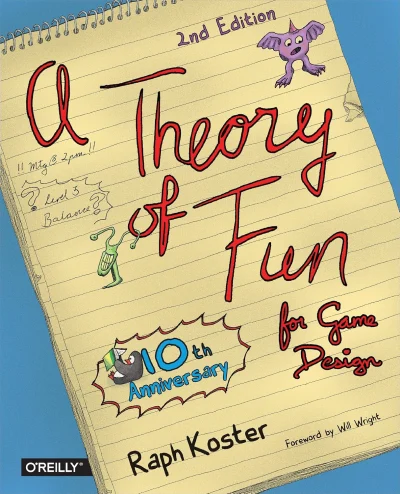
Turns out, even game designers outside of education think this way. Raph Koster’s core text for game designers, A Theory of Fun for Game Design, basically argues that games are the process of learning, and the joy comes from the experience of pattern matching and solving puzzles.
Starting from Pedagogical First Principles
So I started looking at it from a pedagogy-first perspective (some would say "first principles"):
At a high level, games are incredible for learning because they are a complete student-centered way to support students in working through problem-based learning directly. Games give students the power to figure things out, to solve problems in context, doing harder, more complex problems over time — in a way that’s accessible and doesn’t just immediately make someone shut down from the challenge and difficulty.
How to take hundreds of learning theories and best practices and encode them into game-based learning practices — and then communicate that to others — is something I’ve been working on for the past decade as we developed sandbox/simulation games, our role-playing game approach, science content, math content, and now help partners create with our approach across any topic.
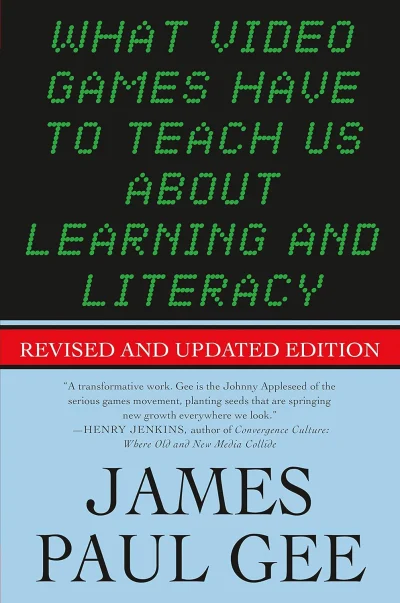
If you want to read more about this, the linguist James Paul Gee did incredible work after watching his son play video games, and dove in deep to truly understand how games can teach us about good learning. What I love is that he doesn’t just frame it as "video games must be used," but how we as educators can apply these incredible learning principles that games already use (see Raph Koster, above) and use them to make learning even better.
Our Answer, Distilled
So I’ve summarized our core viewpoint on why games into three main principles:
Games make learning concrete and applicable, using real-world or otherwise authentic, interesting scenarios. Students never ask "why am I learning this?" when they are seeing the application as they learn within the game.
Games are set up for productive struggle where learners are figuring things out themselves. They are pulling in information to solve problems, applying it, getting instant feedback.
Games are less threatening and more rewarding than most learning.
See my separate article on how to make learning less adversarial →See the new Our Approach section for more information about each of these principles. I’ll be writing more in the coming months to share deeper thoughts on each of these topics, but in the meantime would love to hear from others’ perspectives on why games for learning. 🩵
Lindsey reads every response. Drop your perspective on why games for learning — what resonated, what you'd push back on, what you'd add.